

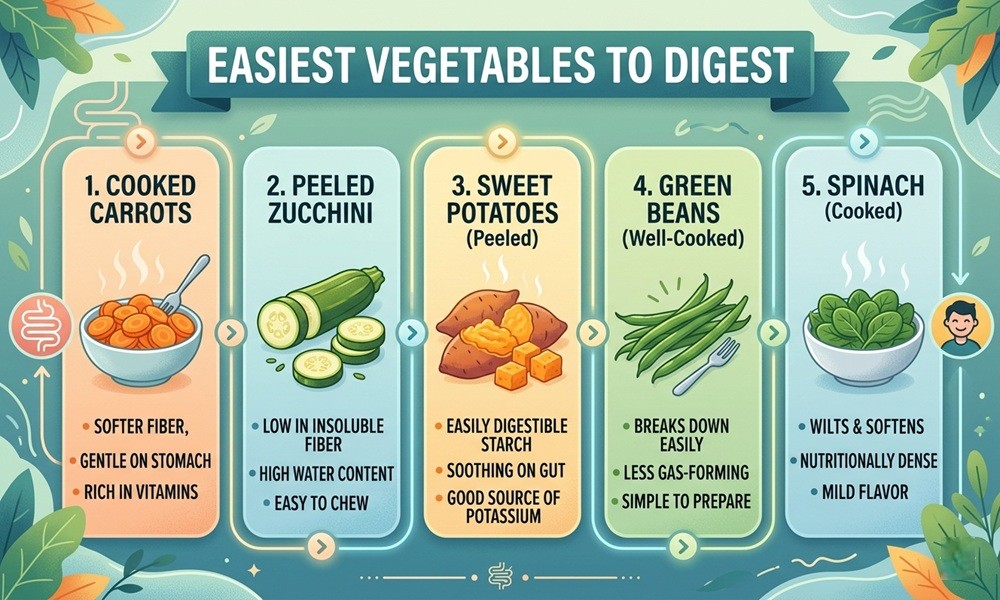
Vegetables are non-negotiable for good health – but if you have a sensitive gut, IBS, or are recovering from a digestive flare, not all of them are equally friendly. Some are incredibly gentle; others are notorious gut irritants.
Here’s a practical guide to the easiest vegetables to digest, and why certain ones cause problems.
Why Some Vegetables Are Harder to Digest
The main culprits in hard-to-digest vegetables are:
- FODMAPs – fermentable carbohydrates (fructans, oligosaccharides, polyols) that gut bacteria ferment into gas
- Insoluble fiber – speeds transit and can irritate a sensitive gut lining
- Cruciferous compounds – sulfur-containing chemicals in broccoli-family vegetables that produce gas
- Lectins – proteins in raw legumes and some vegetables that can cause gut irritation
- Oxalates – in raw spinach and beets, can cause issues for sensitive individuals
Cooking vegetables breaks down most of these compounds significantly, making them easier to tolerate.
The Easiest Vegetables to Digest
✅ Best Choices for Sensitive Guts
|
Vegetable |
Why It’s Gentle |
|---|---|
|
Zucchini |
Low FODMAP, low fiber, very high water content |
|
Carrots (cooked) |
Soft, starchy, very well-tolerated when cooked |
|
Sweet potato |
Soluble fiber, low FODMAP, soothing to the gut lining |
|
Cucumber |
Mostly water, virtually no fermentable sugars |
|
Butternut squash |
Soft, mildly sweet, gentle on digestion |
|
Green beans |
Low FODMAP, easy to digest, even when raw |
|
Peeled white potato |
Very low in gut-irritating compounds, filling |
|
Iceberg lettuce |
Lower in fermentable sugars than other lettuces |
|
Cooked spinach |
Cooking removes oxalates and reduces fiber irritation |
|
Peas (small portions) |
Moderate FODMAP but generally tolerated in small amounts |
Preparation Tips
- Steam or roast rather than eating raw – heat breaks down tough fibers
- Peel vegetables when possible – most gut-irritating compounds concentrate in the skin
- Start with small portions when reintroducing after a flare
- Chew thoroughly – digestion starts in the mouth; proper chewing reduces gas formation
Vegetables to Approach With Caution (if you have a sensitive gut)
|
Vegetable |
Main Issue |
|---|---|
|
Broccoli, cauliflower, Brussels sprouts |
High in gas-producing sulfur compounds and FODMAPs |
|
Onions and garlic |
Very high fructans (major FODMAP trigger) |
|
Asparagus |
High inulin content, produces gas in most people |
|
Raw kale and cabbage |
Tough fibers + glucosinolates |
|
Corn |
Insoluble fiber hull passes through intact |
|
Artichokes |
Very high inulin, major gas producer |
|
Leeks |
High fructans, similar to onions |
What About Fiber – Do I Need to Avoid It?
No. The goal is not to avoid fiber entirely – both types of fiber are important:
- Soluble fiber (oats, carrots, sweet potato, zucchini) – dissolves in water, forms a gel, feeds beneficial gut bacteria, and is generally well-tolerated even in sensitive guts
- Insoluble fiber (wheat bran, raw vegetables, corn) – adds bulk and speeds transit, but can be irritating in a sensitive gut
Focus on soluble fiber during flares and gradually reintroduce insoluble fiber as tolerated.
Vegetables and IBS: Low-FODMAP Choices
If you have IBS, a low-FODMAP approach is one of the most evidence-backed dietary strategies. Low-FODMAP vegetables include:
- Zucchini, carrots, green beans, cucumber, bell peppers (red and yellow), spinach (cooked), potatoes, parsnips, and bok choy
Key Takeaways
- Zucchini, cooked carrots, sweet potato, butternut squash, and green beans are among the gentlest vegetables for digestion
- Cooking dramatically reduces the gas-producing and irritating potential of most vegetables
- High-FODMAP vegetables (onions, garlic, broccoli, cauliflower) are the most common gut irritants
- People with IBS do best starting with low-FODMAP options and reintroducing others gradually